
An agentic system does more than generate an answer. Within a defined scope, it can keep relevant state, select a next step, use authorised tools, observe the result and decide whether to continue, stop or hand over.
In brief
- 01An agentic system pursues a bounded objective through a sequence of decisions and tool calls, rather than producing one isolated response.
- 02The model may propose a next step, but permissions, validation, approval and stop conditions belong to the surrounding system.
- 03More agents do not automatically create a better system. Additional roles are useful only when their responsibility, information and authority can be separated clearly.
Agency is not unlimited freedom. It is the ability to act inside an explicit operating envelope.Banana Navy engineering principle

A working definition, not a legal category
There is no single universal legal or technical definition that covers every system described as agentic. For Banana Navy, the term means a software system that receives an objective, maintains the state needed for that objective, selects among permitted steps, invokes authorised tools and evaluates what happened before continuing. This is a practical architecture definition, not a certification or a regulatory classification. Legal obligations still depend on the system’s purpose, sector, impact and role.
Six parts of an agentic system
- 01Objective & scope ›The system receives a specific outcome to pursue, together with explicit exclusions, completion criteria and stop conditions.
- 02State & memory ›It keeps only the context needed for the task, with defined sources, access rules, retention and expiry.
- 03Planning & selection ›A model, workflow engine or policy selects the next permitted step from the current state.
- 04Tools & permissions ›APIs, search, messaging and business systems expose narrowly defined functions under the identity of the user or service.
- 05Orchestration & policy ›Deterministic controls validate inputs, authorise actions, impose limits and route exceptions outside the model.
- 06Evaluation & oversight ›The system checks outcomes, records evidence and knows when approval, human takeover, rollback or shutdown is required.
Assistant, workflow or agentic system?
These patterns overlap, but they should not be treated as synonyms. The right choice is the least complex architecture that can deliver the required outcome safely and repeatedly.
- 01Assistant
Answers, summarises or retrieves information for a person. The person normally chooses and executes the next action.
- 02Deterministic workflow
Runs a known sequence of rules and integrations. The path is designed in advance and variation is tightly constrained.
- 03Agentic system
Selects among permitted steps or tools based on the current state, then observes the result before deciding what comes next.
- 04Multi-agent system
Assigns distinct roles to several agents when separation of knowledge, authority or validation creates a real operational benefit.
Where control must live
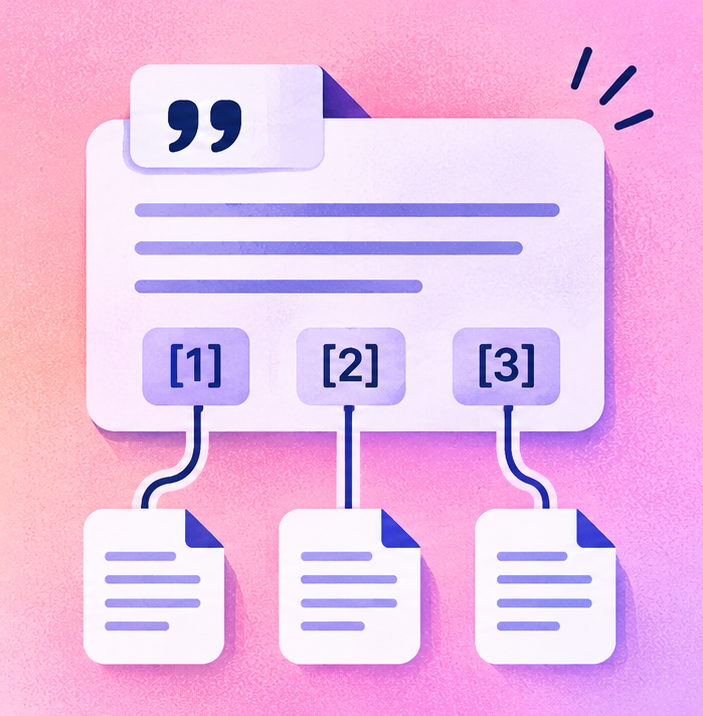
A prompt can describe expected behaviour, but it cannot be the only security boundary. The surrounding application must enforce what the agent may read, which tools it may call, what parameters are valid and which decisions need approval.
- 01Grant each tool only the functions and data required for the current task.
- 02Enforce authentication and authorisation in the downstream system, not through a model instruction.
- 03Validate structured inputs, outputs and tool parameters before execution.
- 04Require human approval for irreversible, sensitive or high-impact actions.
- 05Record the objective, relevant evidence, policy version, tool call and outcome without retaining unnecessary data.
- 06Provide tested timeout, rollback, transfer and shutdown paths.
What external frameworks reinforce
This control model is a Banana Navy engineering pattern. It is informed by references that treat AI risk as a lifecycle and runtime concern rather than a one-time model check.
- 01The NIST Generative AI Profile recommends pre-deployment testing, evaluation of third-party components, continuous monitoring and incident response across the system lifecycle.
- 02The OWASP Agent Control Standard structures agent security around systems that are inspectable, traceable and instrumentable, with policy controls that remain active at runtime.
- 03OWASP’s Excessive Agency guidance recommends minimising tool functionality, permissions and autonomy, requiring approval for high-impact actions and enforcing authorisation in downstream systems.
When multiple agents help — and when they do not
A multi-agent architecture is justified when roles need different knowledge, tools or authority, or when one component must independently challenge another. It is not a shortcut around weak requirements. Every additional agent creates another handoff, context boundary, permission set and failure mode to test.
- 01Separate duties
Use distinct agents when research, decision, execution and validation must not share the same authority.
- 02Expose disagreement
Use an independent check when conflicting evidence needs to remain visible instead of being merged into one confident answer.
- 03Parallelise bounded work
Run independent specialist tasks in parallel only when their inputs and completion criteria are explicit.
- 04Prefer one controlled path
If one workflow or one agent can complete the job reliably, additional agents add coordination cost without creating control.
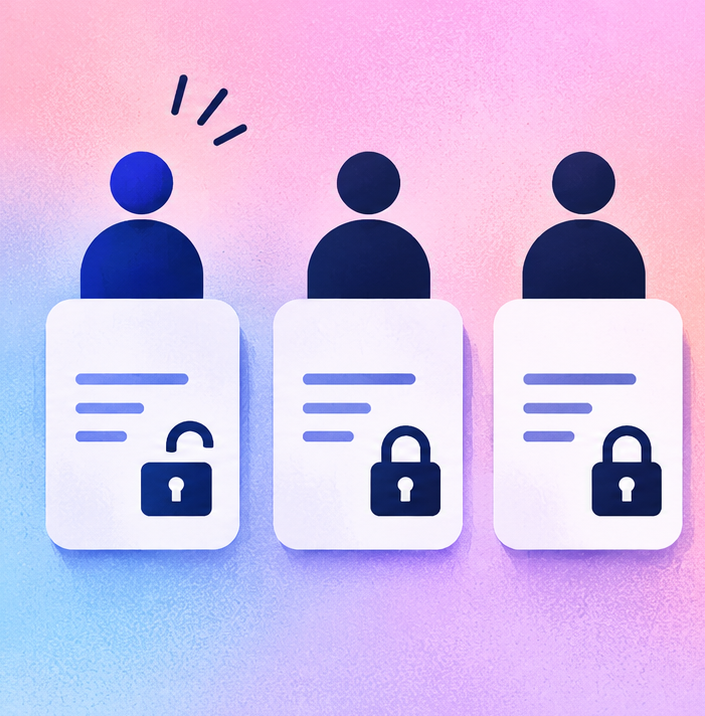
A production control loop
- 01Bound ›Define the objective, allowed data, tools, actions, completion criteria and accountable owner.
- 02Observe ›Collect the minimum authorised context and record which sources and versions shaped the decision.
- 03Propose ›Let the agent select a permitted next step without treating its proposal as an authorisation.
- 04Authorise ›Apply identity, permissions, business rules, thresholds and any required human approval.
- 05Execute ›Call the narrowest available tool and keep the downstream system responsible for access control.
- 06Verify ›Check the actual outcome, detect partial failure and decide whether to continue, retry, roll back or transfer.
- 07Learn safely ›Use reviewed traces and incidents to improve policies and tests; do not silently turn live conversations into new authority.
Questions to answer before deployment
- 01What exact outcome may the system pursue, and what is explicitly out of scope?
- 02Which source, identity and permission authorise every tool call?
- 03Which action needs confirmation or approval, and who can provide it?
- 04How does the system detect incomplete, contradictory, stale or unavailable information?
- 05What evidence is retained, for how long and under which access policy?
- 06What happens when a model, tool, source or human operator is unavailable?
- 07Who can pause, roll back and retire the system?
From internal knowledge to controlled action
A sourced internal assistant is often the right first step: it retrieves approved information and leaves the final action to a person. Autonomy can then increase incrementally, only after permissions, evidence, evaluation and takeover procedures have been validated for the specific journey.
Technical note based on the Banana Navy working definition of an agentic system. It is not a universal standard, certification, security audit or legal opinion. References checked on 10 November 2026.
Design the control model before adding autonomy.
Let's talk
- marc@banana-navy.com
- Phone
- +32 495 27 70 44
- Studio
- Banana Navy SRL
Rue Antoine de Saint-Exupéry 2
6041 Charleroi (Gosselies), BelgiumVAT BE 0745.575.058