Structured call intake
- Collect location, reason, impact and contact details.
- Validate required fields before creating or routing a request.
01 · Concrete applications
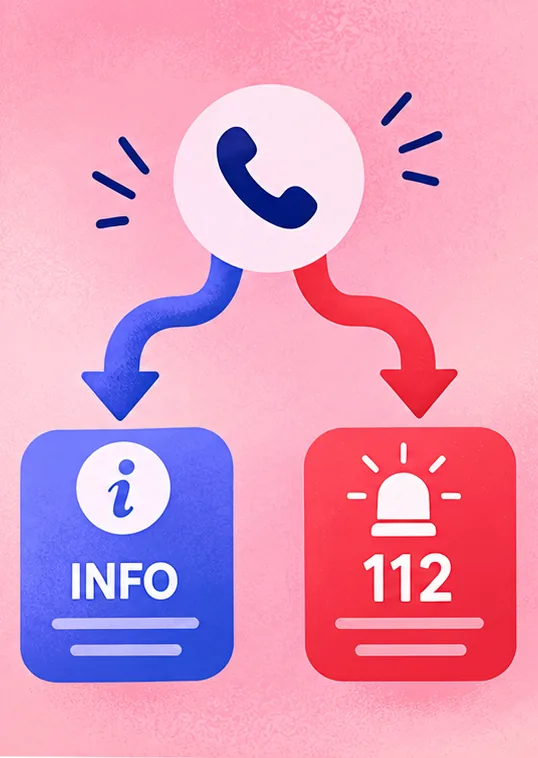
Crisis information and coordination lines.
Technical incident intake for essential services.
Driver, site and delivery exception dispatch.
Citizen reports that require a responsible field team.
02 · Operating model
03 · Call journey
Receive the call and state the line’s scope.
Capture location, reason, impact and contact details.
Apply deterministic priority and eligibility rules.
Create the permitted dispatch or incident record.
Transfer danger, uncertainty and exceptions to the coordinator.
04 · Connected tools
06 · Questions
It can apply deterministic rules defined by the organisation, but operational judgement and command remain with the coordinator or responsible team.
A journey may use telephony, address or location services, an incident or dispatch system, an on-call directory and a supervision console. Each tool receives only the permitted data and actions.
The agent can ask configured clarification questions and verify the format. If the location remains uncertain or the situation is safety-critical, it should transfer with the information collected.
The fallback can preserve the call details, notify or transfer to the coordinator and avoid claiming that an intervention was created. Any queued write should be explicit and monitored.
Banana Navy · Voice AI
We map the journey, permitted actions, integrations and human handover before choosing the architecture.